
Thursday, 05 February 2026
SPID vs. CIE: understanding Italy’s digital IDs for public services
The choice between SPID vs CIE Italy is essential when accessing digital public services and legal procedures. Italy relies on secure digital systems to manage access to public services.. Today, two primary tools are used to verify identity online: SPID and the electronic identity card. Both allow individuals to access services offered by public administrations as well as certain private entities, but they function differently and are suited to different legal and residency situations.
If you are applying for Italian citizenship, managing immigration filings, or handling administrative procedures in Italy, choosing the correct digital identity system is essential. Understanding how these two digital identity options differ matters because access requirements, security levels, and long term usability vary depending on your status and location.
Why digital identity matters when dealing with public administrations
Italy has significantly expanded its digital infrastructure to reduce in person appointments and streamline how public administrations deliver services. Many government operations are now handled online, including tax filings, healthcare access, residency registrations, and permit applications.
To protect personal data and ensure accurate recognition, Italy uses secure digital identification systems that comply with GDPR and Italian and European data protection regulations. These systems help reduce fraud and improve efficiency when accessing services provided by public administrations.
For individuals involved in legal processes, delays in digital access can affect timelines, appointments, and official submissions. Understanding which digital identity applies to your situation helps prevent unnecessary complications.

SPID as a digital identity tool
SPID, or Sistema Pubblico di Identità Digitale, is a purely digital system that provides login credentials for accessing online services. It consists of a username and password and allows users to authenticate through a smartphone using one time codes or an authentication app.
SPID credentials are issued by digital identity providers authorized by AgID (Agenzia per l’Italia digitale). Registration can be completed in person, via webcam, or using an electronic identity card or digital signature. The average time required for data entry during registration is approximately five to ten minutes, making SPID widely accessible.
SPID offers three different levels of security depending on the service being accessed. For most daily interactions, users rely on basic or intermediate levels, which balance ease of use with adequate protection. In 2026, SPID remains the dominant tool for routine online tasks, with a large majority of users preferring it for its speed and lack of physical card requirements.
SPID is particularly effective for general interactions with public administrations and private service providers, enabling mass adoption and a single login experience across platforms.
What is CIE (Carta d’Identità Elettronica)?
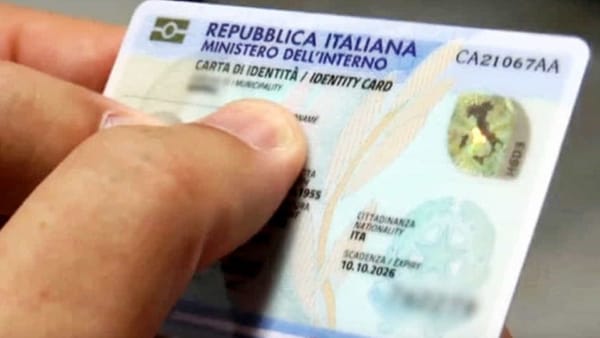
The Electronic Identity Card (CIE) is Italy’s official identification document issued by local municipalities. It replaces the older paper ID card and contains a secure microchip with personal and biometric information.
Starting August 3, 2026, Italy will no longer recognize paper identity cards as valid, regardless of their printed expiration date. In line with EU Regulation 2019/1157, only the Electronic Identity Card (CIE), equipped with a machine-readable zone, will be accepted as valid identification.
This electronic identity card functions both as a physical Italian identity document and as a digital access tool. It allows individuals to confirm identity in person and access public service portals using the CIE application and compatible devices. The electronic ID card may also be used in combination with other tools, such as the national services card, depending on the service.
The Ministry of the Interior oversees the issuance of the electronic identity card. Applications must be completed in person at a municipal office, where biometric data is collected. Once approved, the card is delivered by registered mail.
Each electronic identity card has a defined validity period based on age. Minors aged below certain thresholds receive cards with shorter validity periods. Online access features are activated by following official instructions and using compatible devices.
Key differences between SPID and the electronic (CIE) identity card
SPID and the electronic identity card differ in both form and security level.
SPID is designed for speed and convenience and is widely used for daily online interactions. The electronic identity card, by contrast, offers higher security through its physical card, NFC chip, and biometric verification, making it more suitable for critical or sensitive transactions.
While SPID credentials can be activated remotely, obtaining an electronic identity card requires an in person application. Some services in Italy rely on both systems, using SPID for faster access and the electronic identity card for operations that require stronger verification.
The electronic identity card also supports features such as “Entra con CIE,” (Log in with CIE) which allows certain levels of access without always requiring the physical card or a smart card reader, depending on the service and device used.
Digital identity and legal procedures in Italy
Access to online portals is increasingly required for legal and administrative procedures in Italy. Applications, appointment scheduling, document filing, and status updates may all require digital authentication.
SPID is often sufficient for accessing tax platforms, local authority sites, and many ministry portals. However, procedures involving higher security requirements may require the electronic identity card due to its higher level of assurance.
Foreign nationals and dual citizens may encounter limitations depending on residence status and documentation. Choosing the incorrect system can result in access issues that delay filings or require additional verification steps.

Common issues applicants encounter
Individuals managing legal matters in Italy frequently experience challenges related to digital identity setup.
Common misconception
- Difficulty activating SPID from outside Italy
- Assuming SPID replaces the electronic identity card in all situations
- Device compatibility issues when using the electronic identity card
- Delays caused by expired credentials or incomplete recognition
These issues can affect submission timelines, payments, and official communication with public administrations. Understanding requirements in advance helps reduce interruptions during legal or administrative processes.
Which option is right for you?
SPID is often suitable for individuals who need quick online access. It is widely considered easier and quicker for routine logins and general interactions.
The electronic identity card is more appropriate for long term residents who require a multifunctional identity document, higher security, and access to sensitive services. Holding an electronic identity card is recommended for smoother access to certain procedures.
Many people ultimately use both systems. SPID facilitates daily interactions, while the electronic identity card supports high security transactions and future integration with European digital identity frameworks.
How Aprigliano can support your digital and legal needs in Italy
Understanding Italy’s digital identity systems is an important step when managing legal, immigration, or administrative matters. Choosing the correct digital identity, and knowing when SPID or the electronic identity card is required, can help prevent delays, access issues, and procedural complications.
Aprigliano International Law Firm provides expert guidance for individuals and families navigating Italian legal processes. Our experienced team specializes in Italian citizenship by descent, marriage or residence (naturalization), as well as immigration services, investor visas, and business incorporation.
Contact us today for personalized assistance with visas, residency permits, citizenship applications, or other Italian legal matters.